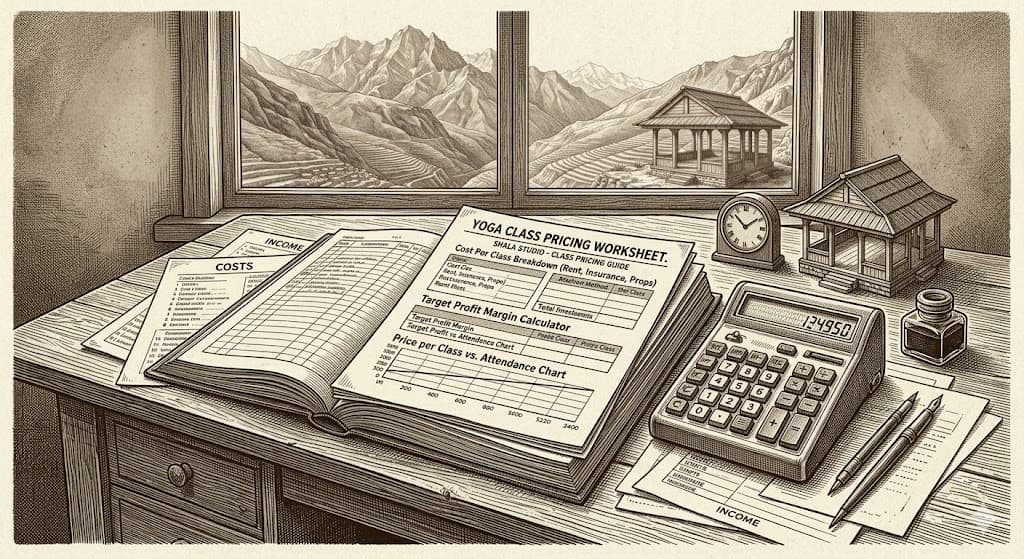
How to price your yoga classes
A practical guide for independent teachers setting their own rates.
By Daniel Yeoman · 5 min read · 20 May 2026
Pricing a yoga class is not just a maths exercise. It tells students what kind of class this is, how much preparation goes into it, and whether you are building something sustainable.
Start with your real costs. Venue hire, travel, insurance, props, payment fees, booking tools, and the unpaid time around the class all matter. A class that looks profitable on the surface can quickly become a loss if you ignore the hour before and after teaching.
Work backwards from a sustainable class
If a room costs 20 pounds and you charge 10 pounds per student, you need three students before the class pays you anything. If you want to earn 50 pounds for teaching, you need seven students. That is useful to know before you choose the price.
Keep the price simple
Students should be able to understand the price immediately. A single drop-in price is usually enough when you are starting. You can add concessions, class passes, or memberships later, but complexity makes booking harder.
Do not copy the cheapest class nearby
Another teacher may have a free room, a different audience, or a studio paying them separately. Your price has to reflect your costs and your students, not someone else's situation.
Use concessions with intention
Concession pricing can make classes more accessible, but it should still be clear. Say who it is for and trust students to choose honestly. Avoid creating a system that makes people explain their finances to come to yoga.
Review the price regularly
If a class is full every week and still barely covers your time, the price may need to change. If a class is new and quiet, the problem may be visibility rather than price. Review every few months with actual booking numbers, not anxiety.
The right price is one that students understand, that feels fair for the class, and that lets you keep teaching without quietly subsidising the work.
Pay report